Crochet Ripple Baby Blanket Pattern
This post may contain affiliate links. If you buy through them we may earn a small commission at no extra cost to you. Learn more.
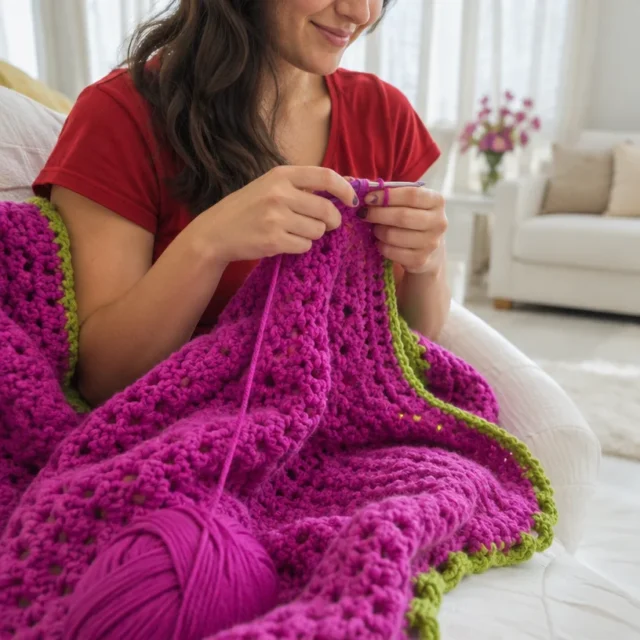
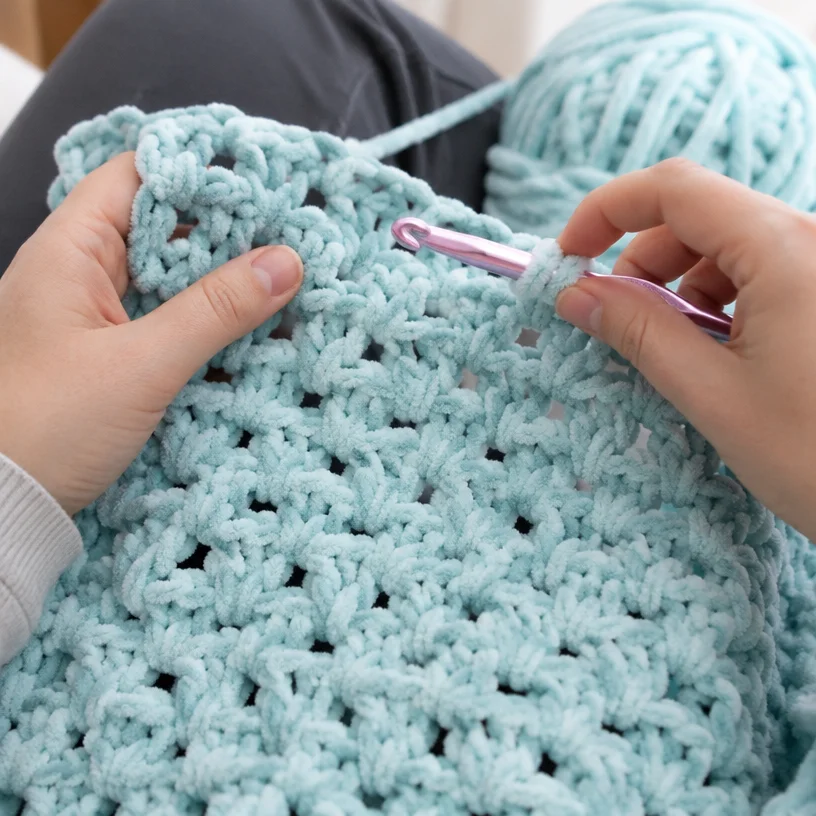
This soft baby ripple crochet blanket uses simple single crochet stitches to create a gentle zigzag texture. The plush Bernat Baby Blanket yarn makes it warm, cuddly, and comfortable, while the repeating pattern is easy to memorize after the first row. It is a relaxing project for beginners and an especially thoughtful handmade gift for a new baby.
Thank you for reading this post, don't forget to subscribe!Why you’ll love this pattern
- Beginner-friendly construction: The blanket uses single crochet throughout, with increases and skipped stitches shaping the ripple.
- Easy repeating rhythm: After the foundation row, the same second-row pattern is repeated until the blanket reaches the required length.
- Soft and cozy texture: Bernat Baby Blanket yarn creates a thick, plush fabric that is ideal for cuddling.
- Practical handmade gift: A finished blanket works well for baby showers, birthdays, or a new nursery.
- Relaxing project: The repetitive rows are portable and easy to work while watching television or traveling.
- Attractive without complicated stitches: The ripple effect comes from the stitch placement rather than advanced techniques.
“The ripple pattern was much easier than I expected, and the super-soft yarn made the blanket feel special from the very first row. Counting the peaks and valleys helped me keep the edges neat.”
How this crochet pattern comes together
You will make a rectangular baby blanket beginning with a chain of 86 stitches. The first row establishes the ripple shape with single crochet increases, skipped stitches, and groups of six single crochet stitches.
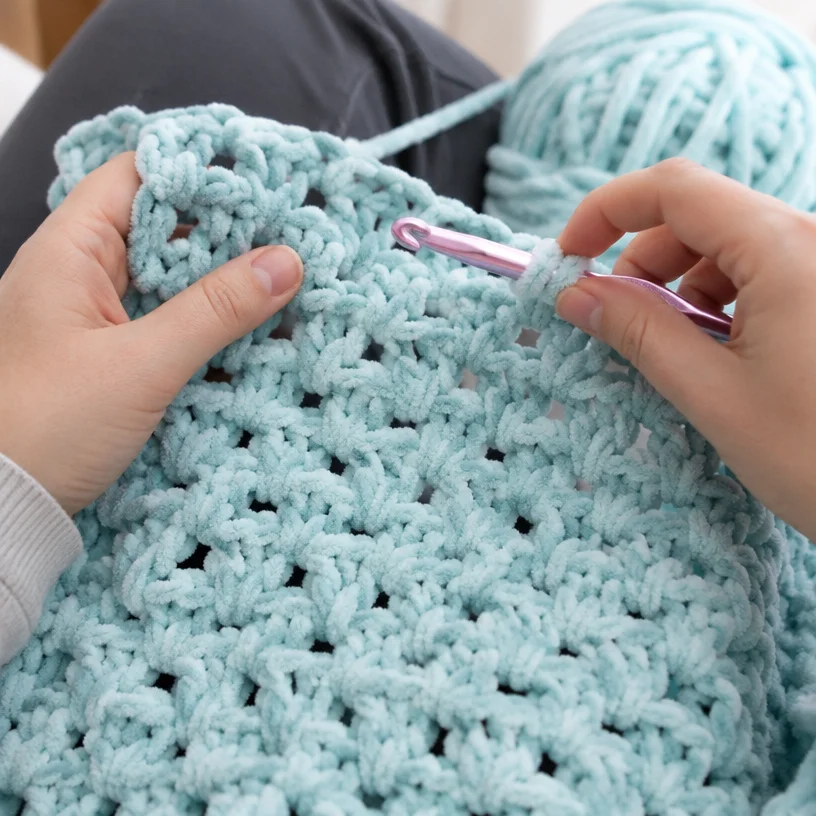
The remaining rows are worked in single crochet through the back loops only. This creates subtle horizontal ridges while the repeated increases and skips maintain the peaks and valleys of the ripple.
The pattern is suitable for a confident beginner who understands basic chains, single crochet, turning, and working into back loops. Because the yarn is bulky and the stitch pattern repeats, the blanket should progress steadily, although the total time depends on your crochet speed and tension.
Materials you’ll need
- Bernat® Baby Blanket™ Frosting™
10.5 oz/300 g; 220 yds/201 m
Use Cozy Rosie (61001) or Seaside (61004): 2 balls, or approximately 440 yds/402 m - Crochet hook: U.S. L/11 (8 mm) Susan Bates® Silvalume™ crochet hook, or the size needed to obtain gauge
- Susan Bates® yarn needle for weaving in ends
Bernat Baby Blanket is a thick, plush yarn designed for soft projects. Its bulky texture can make individual stitches difficult to see, so good lighting and consistent tension are helpful. If you substitute another yarn, choose a similar bulky or blanket-weight yarn. A different fiber or thickness may change the blanket’s size, drape, warmth, and yardage requirements.
Step-by-step instructions
Abbreviations
- ch: chain
- sc: single crochet
- rep: repeat
- RS: right side
Start the blanket
- Chain 86.
The original pattern includes a diagram on page 2. Use it as a visual reference if available.
Work the first row
- Turn your foundation chain so the loops are easy to work into.
- Make 2 sc in the second ch from the hook.
- Repeat the following sequence across the chain:
- Make 1 sc in each of the next 6 ch.
- Skip 1 ch.
- Make 1 sc in each of the next 6 ch.
- Make 3 sc in the next ch.
- Continue repeating the sequence to the end of the chain.
- End the final repeat with 2 sc in the last ch.
- Turn.
The increases form the ripple peaks, while the skipped chain creates the valleys. Check the row before turning to make sure the peaks and valleys occur at regular intervals.
Work the second row
- Chain 1.
- Work into the back loop only of each stitch across the row.
- Make 2 sc in the first sc.
- Repeat the following sequence across the row:
- Make 1 sc in each of the next 6 sc.
- Skip the next 2 sc.
- Make 1 sc in each of the next 6 sc.
- Make 3 sc in the next sc.
- Continue repeating the sequence to the end of the row.
- End the final repeat with 2 sc in the last sc.
- Turn.
Repeat and finish
- Repeat the second row until the blanket measures 42 in [106.5 cm] long.
- Fasten off.
- Weave in all loose ends securely with the yarn needle.
Finished project inspiration
The completed ripple blanket is especially suitable for:
- A baby shower or newborn gift
- A cozy nursery throw
- A stroller or car-seat blanket
- A lap blanket for quiet time
- A handmade keepsake for a child
- A coordinated nursery set when paired with matching plush accessories
For gifting, fold the blanket neatly and tie it with a soft ribbon. Avoid adding loose decorative pieces to a baby blanket, since detachable embellishments can create a safety risk.
Washing and maintenance
Bernat Baby Blanket yarn is generally made for easy-care projects, but always check the label on your specific ball before washing.
- Use the care instructions printed on the yarn label.
- Wash with gentle detergent and avoid harsh bleach.
- Choose a gentle cycle and the recommended water temperature if machine washing is permitted.
- Do not wring or twist the blanket, as the weight of the wet yarn can stretch the fabric.
- Reshape the blanket while damp and dry it according to the label instructions.
- If air-drying, support the blanket evenly rather than hanging it from one corner.
- Store it clean and completely dry in a breathable container or drawer.
- Keep it away from rough surfaces that may increase pilling.
Blocking is usually optional for plush blanket yarn. If the edges need minor shaping, gently smooth the blanket into place rather than stretching it aggressively.
Tips for success
- Check your tension early. An 8 mm hook is suggested, but use the hook size needed to obtain the correct fabric and comfortable tension.
- Count the ripple sections. The six single crochet stitches, skipped spaces, and three-stitch increases create the pattern’s structure. Missing one section can make the next row difficult to align.
- Mark the first stitch if needed. The edge increases can be easy to overlook, especially when working with fuzzy yarn.
- Work into the correct loops. Every row after the first is worked through the back loops only. Accidentally working through both loops will reduce the ridged texture.
- Watch the edge stitches. The instructions finish each row with 2 sc in the last stitch. Missing this increase can cause the blanket to narrow.
- Use good lighting. Plush yarn can hide the tops of stitches, so pause and identify each stitch before inserting the hook.
- Do not pull stitches too tightly. A relaxed grip makes it easier to insert the hook into bulky yarn and keeps the fabric soft.
- Measure periodically. Check the length as you go so you can stop when the blanket reaches 42 in [106.5 cm].
- Weave in ends securely. Thread the yarn needle through several nearby stitches in different directions, then trim the excess carefully.
Customize your project
- Choose a different solid color: A soft neutral, pastel, or deeper shade can change the blanket’s nursery style without changing the construction.
- Use planned color sections: If changing colors, join the new color at the end of a row and weave in the ends securely. Additional color changes will create more finishing work.
- Make the blanket longer: Continue repeating the second row until it reaches your preferred length. More length requires additional yarn.
- Adjust the width carefully: The starting chain establishes the ripple sequence. A different chain length may disrupt the pattern unless it preserves the required repeat structure, so test a small foundation section first.
- Add a simple border: A border can frame the blanket and disguise slightly uneven edges, but it will increase the finished dimensions and yarn usage.
- Create a coordinating set: Use the same color palette for a small lovey, cushion, or nursery accessory, adjusting the design to suit the item.
- Try a different bulky yarn: A comparable yarn can work, but differences in fiber, thickness, stretch, and texture may change the drape and final size.
Frequently asked questions
Is this ripple blanket beginner-friendly?
Yes. The blanket uses chains and single crochet, with increases and skipped stitches forming the ripple. Beginners should take extra care with stitch counting and the back-loop-only instruction.
How much yarn do I need?
The pattern calls for 2 balls of Bernat® Baby Blanket™ Frosting™, providing approximately 440 yds/402 m in total.
Can I use a different hook size?
Yes, but changing the hook size will affect the fabric. A smaller hook usually creates a denser, firmer blanket, while a larger hook produces a looser drape. Use the size needed to obtain the desired gauge and feel.
How can I make the blanket larger?
To make it longer, repeat the second row beyond the stated length, allowing for more yarn. To change the width, adjust the starting chain only if the new chain preserves the pattern’s ripple repeat; otherwise, the peaks and valleys may not align correctly.
Why are my blanket edges becoming uneven?
The most common causes are missing the 2 sc at the beginning or end of a row, placing an increase in the wrong stitch, or skipping too many or too few stitches. Count the ripple sections and check both edge increases before turning.
Why does the fabric look ridged?
The ridges are intentional. Rows after the first are worked through the back loops only, which leaves raised horizontal lines on the fabric.
How long does this project take?
The pattern does not specify a completion time. Since the yarn is thick and the stitch repeat is straightforward, the project should progress more quickly than a blanket made with fine yarn, but your total time will depend on your pace and tension.
Can I wash the finished blanket in a washing machine?
Follow the care label on your specific yarn. If machine washing is permitted, use the recommended gentle cycle and detergent, and avoid wringing or twisting the wet blanket.
Can I sell blankets made from this pattern?
The supplied pattern information does not state its finished-item selling terms. Check the original designer or publisher’s usage policy before selling completed blankets, and credit the pattern source when required.