Bead Stitch Stripes Crochet Blanket Pattern Tutorial
This post may contain affiliate links. If you buy through them we may earn a small commission at no extra cost to you. Learn more.
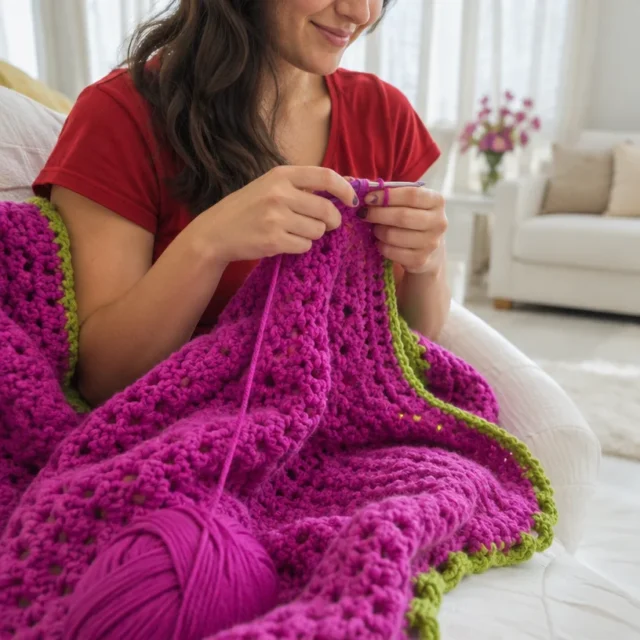
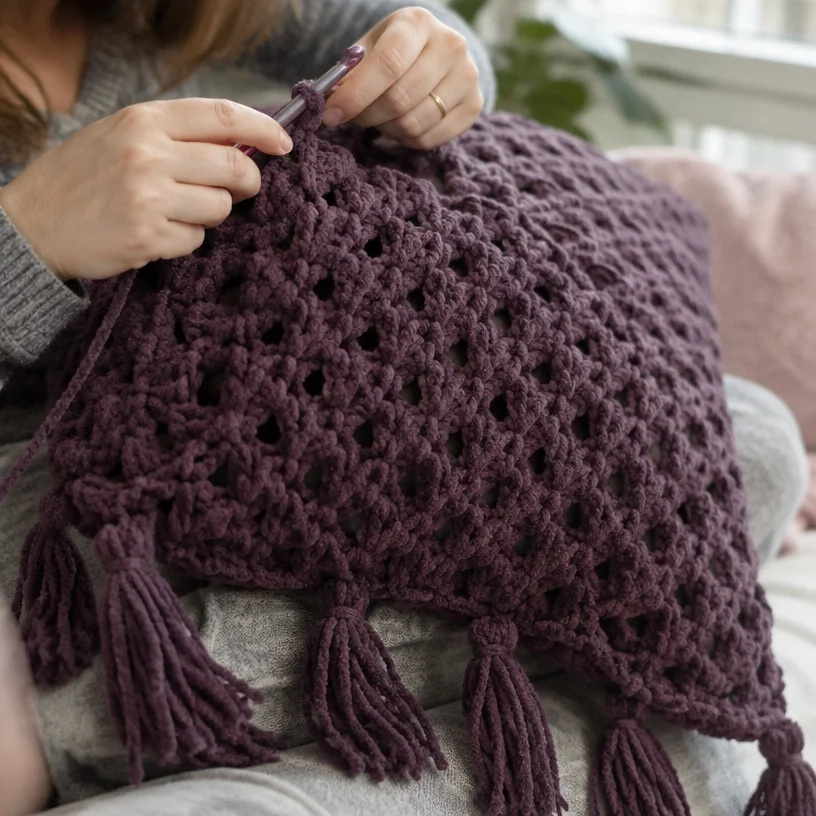
The Bead Stitch Stripes Crochet Blanket is a cozy, textured project made with soft Bernat Blanket yarn and a simple three-row repeat. The raised bead stitches create inviting horizontal texture without requiring complicated shaping, making this blanket enjoyable for relaxed weekend crocheting, thoughtful handmade gifts, or a comfortable addition to a living room or bedroom.
Thank you for reading this post, don't forget to subscribe!Why you’ll love this pattern
- Beginner-friendly texture: The blanket uses half double crochet and a repeating bead stitch. Once the bead stitch is established, the pattern becomes easy to follow.
- Soft and practical: Bernat Blanket yarn creates a thick, plush fabric that is warm and comfortable.
- Straightforward construction: The blanket is worked in rows from the foundation chain upward, with no complex shaping or joining.
- Good skill-building project: You can practice working around a stitch post, maintaining even row edges, and counting textured repeats.
- A handmade gift option: The finished blanket is suitable for birthdays, housewarmings, holidays, and cozy winter gifts.
- Decorative tassels: Four simple tassels add a polished finish to the corners.
“The bead stitches give this blanket much more texture than a basic striped design. The repeat was easy to remember, and the finished fabric feels wonderfully soft and substantial.”
How this crochet pattern comes together
You will make a rectangular crochet blanket beginning with a chain of 96 stitches. The first row is worked in half double crochet. The second row introduces the raised bead stitches, while the third row is worked in half double crochet to anchor and prepare the fabric for the next repeat.
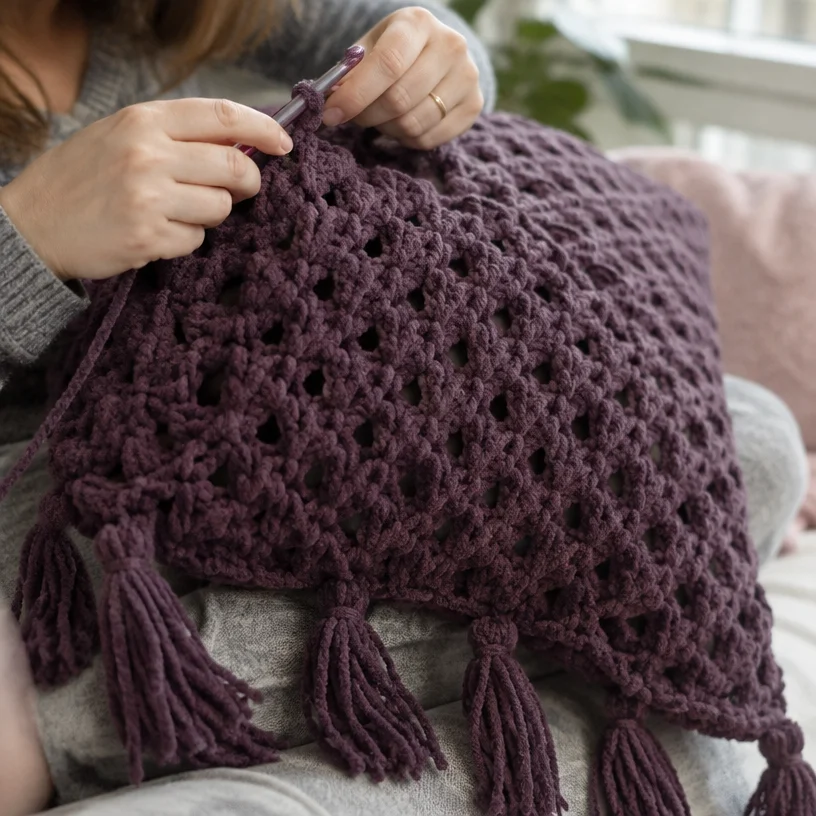
You repeat the second and third rows until the blanket measures approximately 60 inches (152.5 cm) from the beginning. The project must end after a third row, which gives the top edge a neat half-double-crochet finish.
The main technique is the bead stitch, created by working a double crochet and then wrapping around its post to build extra loops before drawing them together. This pattern is suitable for a confident beginner who is comfortable with basic crochet stitches and ready to try a textured stitch. The total completion time depends on your crochet speed, tension, and available crafting time.
Materials you’ll need
- Bernat® Blanket™, 10.5 oz/300 g balls with approximately 220 yds/201 m each
- Version 1: Lead (10780)
- Version 2: Almond (10830)
- Yarn amount: 7 balls, approximately 1,430 yds/1,307.5 m total
- Crochet hook: U.S. L/11 (8 mm), or the size needed to obtain the correct gauge
- Yarn needle for securing ends and attaching tassels
- Cardboard: An 8-inch (20.5 cm) wide piece for making tassels
Bernat Blanket is a bulky, chenille-style yarn that produces a thick, soft blanket fabric. If you choose another yarn, select one with a similar thickness and test a small swatch first. A different yarn weight can change the blanket’s width, drape, thickness, and yarn requirements.
The pattern lists two color options: Lead for Version 1 and Almond for Version 2. You can use either shade for a neutral blanket or choose another color if you prefer. Since the design creates its texture through the stitch pattern rather than color changes, a single shade also works well.
Step-by-step instructions
Abbreviations
- ch: chain
- hdc: half double crochet
- dc: double crochet
- yoh: yarn over hook
- st/sts: stitch/stitches
- rep: repeat
Make the blanket
-
Begin the foundation chain.
Chain 96. -
Work Row 1.
Make 1 half double crochet in the third chain from the hook. Work 1 half double crochet in each chain across to the end. Turn. You should have 94 hdc. -
Work Row 2.
Chain 2. Make 1 double crochet in the first stitch. -
Make the first bead stitch.
Make 1 double crochet in the next stitch. Working around the post of the double crochet just made, yarn over and draw up another loop three times. You will have 7 loops on the hook. Yarn over and draw through 6 loops, then yarn over and draw through the remaining 2 loops. This completes 1 bead stitch. -
Continue across Row 2.
Skip the next stitch. Make 1 bead stitch in the following stitch. Repeat this sequence across the row until 2 stitches remain. -
Finish Row 2.
Skip the next stitch. Make 1 double crochet in the last stitch. Turn. You should have 46 bead stitches. -
Work Row 3.
Chain 2. Make 1 half double crochet in each stitch across the row. Turn. You should have 94 hdc.When working into this row, insert your hook through both double crochet stitches from the previous row as well as the top of each bead stitch. This keeps the stitch count and blanket edges even.
-
Repeat the pattern.
Repeat Rows 2 and 3 until the blanket measures approximately 60 inches (152.5 cm) from the beginning. Finish after completing a third row. -
Fasten off.
Cut the yarn, leaving a tail long enough to secure if needed. Fasten off and weave in the end with a yarn needle.
Make and attach the tassels
Make 4 tassels using the same yarn.
- Wrap the yarn around the 8-inch (20.5 cm) wide piece of cardboard 20 times.
- Tie the strands securely through the loops at one end.
- Cut across the opposite end of the wrapped yarn.
- Wrap yarn around the tassel 6 times, approximately 1½ inches (4 cm) below the tied end.
- Fasten the wrapping securely.
- Sew one tassel to each corner of the blanket.
- Secure and weave in all remaining ends.
Ways to use your finished project
- Drape it over a sofa or reading chair for a soft decorative layer.
- Fold it at the end of a bed for extra warmth and texture.
- Give it as a handmade housewarming, birthday, wedding, or holiday gift.
- Use the tassels to add a relaxed, bohemian accent to a neutral room.
- Display it in a craft-fair booth as a cozy home décor item.
- Pair it with matching cushions, baskets, or smaller crochet accessories in coordinating colors.
Because the blanket uses bulky yarn and a textured stitch, it makes a substantial finished piece that works especially well in living rooms, bedrooms, nurseries, and reading spaces.
How to care for your crochet project
Follow the care instructions on the yarn label, especially if you use a substitute yarn. For Bernat Blanket-style chenille yarn, gentle handling helps preserve the soft texture.
- Wash using the label’s recommended settings and water temperature.
- Use a gentle detergent and avoid harsh bleach unless the yarn label specifically permits it.
- Avoid twisting or wringing the blanket, which can stretch the stitches.
- Support the blanket fully when removing it from the washer.
- Reshape it while damp and dry it according to the yarn label.
- If air-drying, lay the blanket flat or support it evenly so the weight does not pull the fabric out of shape.
- Avoid high heat unless the yarn label says it is safe.
- Store the blanket clean and completely dry, folded loosely in a breathable space.
- Keep it away from rough surfaces that may encourage pilling or snagging.
Blocking is usually not essential for a soft blanket made with bulky chenille yarn. If the edges need shaping, gently smooth and reshape the blanket rather than stretching it aggressively.
Tips for success
- Check your tension early. If your fabric feels stiff, try a larger hook. If it feels loose and floppy, try a smaller hook. The pattern recommends an 8 mm hook or the size needed to obtain gauge.
- Count the first row carefully. The foundation chain contains 96 chains, but the completed first row has 94 half double crochets because the first stitch is worked in the third chain from the hook.
- Use stitch markers if needed. Place markers in the first and last stitch of a row to make the blanket edges easier to identify.
- Watch the skipped stitches in Row 2. Each bead stitch is separated by a skipped stitch. Missing one skip can cause the texture and stitch count to drift.
- Keep the bead stitches consistent. Draw up the loops to a similar height each time. Uneven loop height can make the texture look irregular.
- Work into the correct part of Row 3. Insert the hook into both double crochet stitches from the previous row and the top of each bead stitch, as instructed.
- Check your stitch count regularly. Row 1 and Row 3 should have 94 hdc. Row 2 should have 46 bead stitches, with the edge double crochets included as instructed.
- Do not pull the turning chain too tightly. A relaxed chain 2 helps keep the edges from narrowing.
- Measure as you go. Bulky yarn and individual tension can affect the finished dimensions, so check the length before fastening off.
- Secure tassels firmly. Tassels receive handling when the blanket is moved or washed, so sew them on with several secure passes.
Customize your project
- Choose a different solid color. A deep green, rust, cream, charcoal, or dusty blue can change the mood while keeping the pattern simple.
- Use two colors in alternating sections. Changing colors between pattern repeats can emphasize the horizontal texture. Plan your color changes at the row edge and weave in the ends securely.
- Make a smaller blanket. Start with fewer chains, but preserve the pattern’s stitch relationships and work a swatch first. A smaller foundation chain will reduce the width and yarn requirement.
- Make it wider. Add chains to the foundation chain in a way that accommodates the bead-stitch repeat. Test the adjusted chain length before beginning the full blanket.
- Adjust the length. Repeat the two-row pattern fewer or more times to create a shorter or longer blanket. More rows will require additional yarn.
- Try contrasting tassels. Tassels in a second color can create a clear accent at the corners.
- Add a simple border. A border can frame the blanket, but it may change the final width and yarn requirements. Keep the edging simple so it does not compete with the bead texture.
- Create a coordinated set. Use the same yarn color for smaller cushions or baskets, remembering that those projects will need their own stitch and size adjustments.
Changing yarn weight, hook size, or foundation-chain length can significantly affect the finished size, thickness, drape, and amount of yarn needed.
Frequently asked questions
Is this crochet blanket beginner-friendly?
Yes. The blanket uses basic half double crochet and double crochet stitches with a repeating bead-stitch technique. Beginners should be comfortable counting stitches and working around a stitch post before starting.
What yarn works best for this pattern?
Bernat Blanket yarn is the specified choice because it creates a soft, bulky fabric. A substitute yarn should have a similar weight and texture. Always make a swatch because a different yarn can change the blanket’s size and drape.
How much yarn do I need?
The pattern uses 7 balls of Bernat Blanket yarn, totaling approximately 1,430 yards (1,307.5 meters).
Can I use a different crochet hook?
Yes. The pattern calls for a U.S. L/11 (8 mm) hook or the size needed to obtain gauge. A smaller hook may create firmer, smaller fabric, while a larger hook may produce looser, larger fabric.
How do I make the blanket wider?
Begin with a different foundation-chain length, but do not change it casually. The bead-stitch row depends on a specific stitch arrangement. Make a swatch and confirm that your adjusted chain supports the intended repeat before working the blanket.
Why are my edges becoming uneven?
Uneven edges usually come from missing the first or last stitch, working into the wrong part of the bead stitch, or accidentally adding stitches at the row ends. Count each completed row and use markers in the edge stitches.
Why does my blanket look stiff?
Your tension may be too tight, or your hook may be too small for your yarn. Try a larger hook and compare the fabric. The finished blanket should have enough flexibility to drape comfortably.
Do I need to block this blanket?
Blocking is optional. With soft bulky yarn, gently reshaping the blanket while it is damp is usually enough if the edges need tidying. Avoid heavy stretching.
Can I sell a blanket made from this pattern?
The provided pattern information does not state the designer’s rules for selling finished items. Check the original pattern source for its current usage terms before listing or selling a finished blanket.
How should I wash the finished blanket?
Follow the care instructions on the yarn label. Use gentle handling, avoid wringing, and reshape the blanket as needed while drying. High heat can affect the yarn’s texture or shape.