Crochet Pattern for Baby Blocks Blanket
This post may contain affiliate links. If you buy through them we may earn a small commission at no extra cost to you. Learn more.
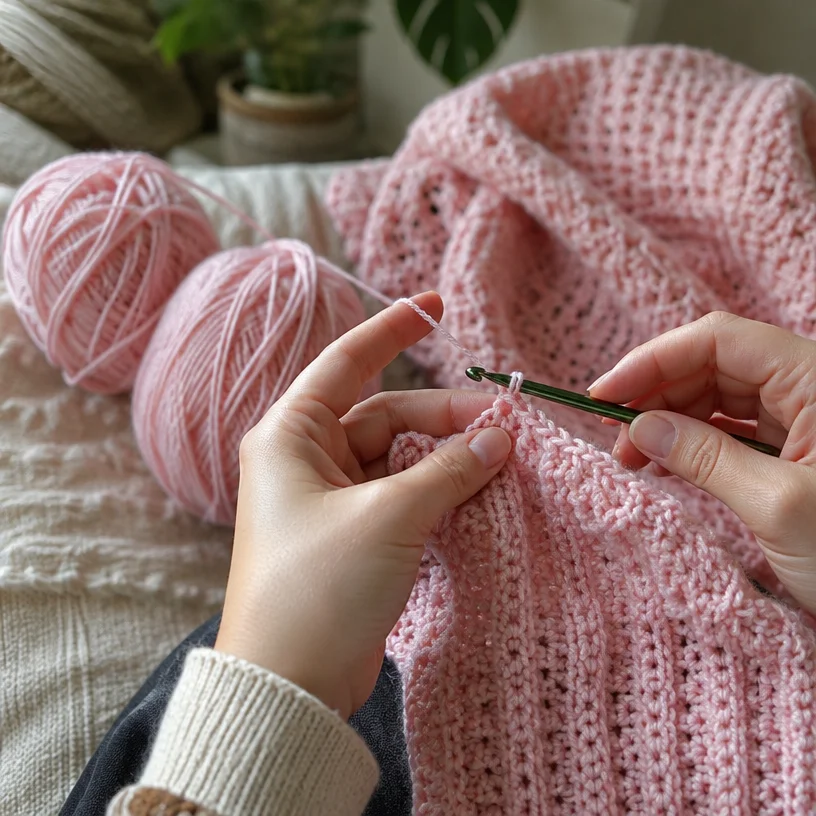
This Baby Blocks crochet blanket is a relaxing corner-to-corner project made from simple double crochet blocks. The soft pink color gives it a gentle nursery feel, while the diagonal construction makes the blanket enjoyable to watch as it grows. It is a practical project for confident beginners and experienced crocheters alike, whether you are making a baby gift, a cozy lap blanket, or a handmade accent for a child’s room.
Thank you for reading this post, don't forget to subscribe!Why you’ll love this pattern
- Beginner-friendly construction: The blanket uses double crochet, chain stitches, and slip stitches in a repeating block pattern.
- Easy-to-follow shaping: You increase one block per row, reach the required size, and then decrease one block per row.
- Portable crochet project: Corner-to-corner crochet is worked in manageable sections, making it convenient for travel or evening stitching.
- Handmade gift appeal: The soft color and geometric blocks are well suited to a baby shower, new-baby gift, or nursery blanket.
- Relaxing repetition: Once the first few rows are established, the pattern becomes predictable and easy to memorize.
“The block construction was much easier than I expected. After the first few rows, I could see the diagonal shape developing, and the finished blanket has such a sweet, classic look.”
How this crochet blanket comes together
The blanket is worked diagonally using a corner-to-corner, or C2C, technique. Each block consists of a chain-3 space and three double crochet stitches. You begin with one block, increase by one block on every row, and continue until the left side measures 32 inches (81.5 cm).
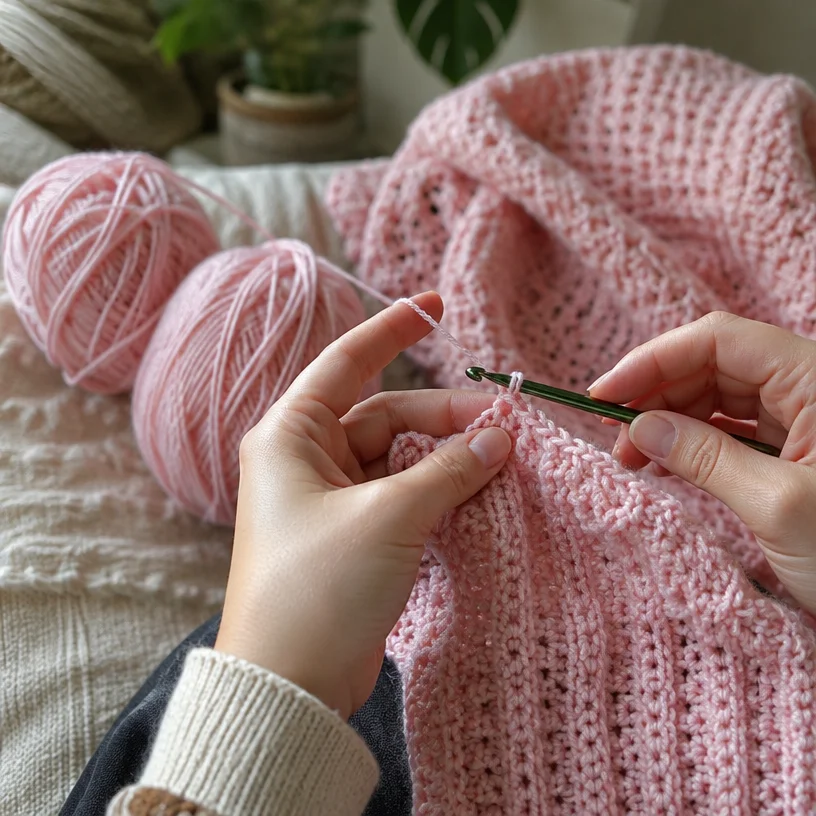
After reaching the specified size, you begin decreasing. Slip stitches move you across the first block, then you work blocks into the remaining chain-3 spaces. Repeating this decrease row gradually reduces the blanket to one final block.
The pattern uses only one yarn color, so there are no color changes or multiple ends to weave in. The exact completion time depends on your crochet speed, tension, and available crafting time, but the repeating stitch pattern makes steady progress easy to track.
Materials you’ll need
- Caron® Kindness™: 7 oz/198 g; 345 yds/315 m per ball
- Color: Candy Pink (53003)
- Quantity: 2 balls
- Crochet hook: U.S. I/9 (5.5 mm), or the hook size needed to obtain gauge
A yarn with a different fiber, thickness, or yardage may change the blanket’s size, drape, texture, and yarn requirements. If substituting, choose a similar-weight yarn and make a gauge sample first. Always check the yarn label for fiber content and care instructions.
Step-by-step instructions
Crochet abbreviations
- ch: chain
- dc: double crochet
- sl st: slip stitch
- sp: space
- RS: right side
Each “block” is made with a slip stitch, chain 3, and three double crochet stitches unless the beginning block is described separately.
Work the increasing section
-
Chain 6.
-
First row, right side: Work 1 double crochet in the fourth chain from the hook. This chain-3 counts as the first double crochet. Work 1 double crochet in each of the next 2 chains. Turn.
You now have 1 block. -
Second row: Chain 6. Work 1 double crochet in the fourth chain from the hook, then 1 double crochet in each of the next 2 chains. This creates the beginning block.
-
Skip the next 3 double crochet stitches. In the next chain-3 space, work slip stitch, chain 3, and 3 double crochet. This creates the next block. Turn.
You now have 2 blocks. -
Third row: Work the beginning block. Work 1 block in each of the next 2 chain-3 spaces. Turn.
You now have 3 blocks. -
Fourth row: Work the beginning block. Work 1 block in each of the next 3 chain-3 spaces. Turn.
You now have 4 blocks. -
Fifth row: Work the beginning block. Work 1 block in each of the next 4 chain-3 spaces. Turn.
You now have 5 blocks. -
Continue increasing in the same way. Add 1 block to each row until the left side, measured from the beginning, is 32 inches (81.5 cm).
Work the decreasing section
-
On the next row, slip stitch in each of the next 3 double crochet stitches. This moves you across the first block without adding a new one.
-
Work 1 block in each chain-3 space up to the last chain-3 space.
-
Slip stitch in the last chain-3 space. Turn.
-
Repeat the last decrease row until only 1 block remains.
Finish the blanket
-
Fasten off.
-
Weave in the yarn ends securely on the wrong side of the blanket. A yarn needle is helpful for working the tail through several stitches without creating a visible lump.
Ways to use your finished project
- Give it as a handmade baby shower or newborn gift.
- Use it as a lightweight nursery blanket or stroller blanket.
- Fold it over the back of a rocking chair or nursing chair.
- Drape it across the end of a crib or child’s bed for decoration, following safe-sleep guidance for babies.
- Use it as a cozy lap blanket in a reading corner.
- Pair it with a handmade baby hat, cardigan, or soft toy for a coordinated gift set.
For a baby, avoid adding loose buttons, beads, or other small embellishments that could become hazardous.
How to care for your crochet project
Caron Kindness yarn should be cared for according to the instructions on its yarn label. When the fiber content or care instructions are unavailable, use gentle handling:
- Wash with cool or lukewarm water.
- Choose a gentle cycle only if the yarn label permits machine washing.
- Use a mild detergent and avoid bleach.
- Do not wring or twist the blanket, as this can stretch the diagonal shape.
- Gently press out excess water and reshape the blanket while damp.
- Dry flat on a clean, dry surface.
- Avoid hanging the blanket when wet, because its weight may pull the stitches out of shape.
- Store it clean and completely dry, folded loosely in a breathable space.
If the blanket develops minor ripples along the edges, gentle wet blocking or steam blocking may help, provided the yarn’s care instructions allow it.
Tips for success
- Check your tension early: Work the first several rows and measure the fabric before continuing. A tighter tension can make the blanket smaller and denser, while a looser tension can make it larger and more open.
- Recognize the block structure: Each completed block has three double crochet stitches and a chain-3 space. Identifying these spaces makes it easier to place the next block.
- Count blocks instead of individual stitches: During the increasing section, the number of blocks should rise by one on every row: 1, 2, 3, 4, 5, and so on.
- Mark the right side if needed: Corner-to-corner fabric can look similar on both sides. Place a removable stitch marker on the right side of the first few rows if you find turning orientation confusing.
- Do not add an extra block accidentally: On an increase row, the beginning block is followed by one block in each available chain-3 space. There should be only one new block added compared with the previous row.
- Measure the correct edge: Begin measuring the left side from the starting corner and stop increasing when it reaches 32 inches (81.5 cm).
- Keep the first decrease neat: The slip stitches across the first block replace that block; they are not an additional stitch pattern to repeat elsewhere.
- Secure the final end carefully: Weave the tail through several stitches in different directions, then trim it close to the fabric.
Customize your project
- Choose another solid color: A soft cream, pale blue, sage, or yellow can give the blanket a different nursery style. Changing color does not alter the construction, but different yarns may affect the finished size.
- Create a striped blanket: Change colors after selected rows for diagonal stripes. This creates extra yarn ends, so plan time to weave them in.
- Use two or more coordinating colors: Alternating colors can emphasize the individual blocks, although careful color planning is needed to keep the design balanced.
- Add a simple border: A single or double crochet border can frame the diagonal edges. A border uses additional yarn and may slightly increase the final dimensions.
- Adjust the size: For a smaller blanket, begin decreasing before the left side reaches 32 inches. For a larger blanket, continue increasing beyond 32 inches before beginning the decrease section. More rows will require additional yarn.
- Make a coordinating set: Use the same color palette for a baby hat, small cushion, or storage basket, choosing a suitable pattern for each item rather than assuming the blanket instructions will transfer directly.
Textured, novelty, or significantly thicker yarns can obscure the block definition and change the fabric’s weight, so test a small sample before committing to a substitution.
Frequently asked questions
Is this crochet blanket suitable for beginners?
Yes. It is a good project for beginners who know how to chain, double crochet, and slip stitch. The diagonal block construction may take a few rows to understand, but the repeat becomes straightforward once the first blocks are established.
What yarn works best for this pattern?
The specified yarn is Caron Kindness in Candy Pink, using 2 balls. If you substitute, choose a similar yarn weight and make a gauge sample. A different fiber or thickness can change the blanket’s size, drape, warmth, and yardage requirements.
Can I use a different crochet hook?
Yes, but the hook size affects the fabric. A larger hook generally creates a looser, drapier blanket, while a smaller hook produces denser fabric. Use the hook size needed to obtain the pattern gauge, if gauge information is available, and check the finished measurements as you work.
How do I make the blanket smaller or larger?
Start decreasing earlier for a smaller blanket. For a larger blanket, continue the increasing section beyond the 32-inch measurement before beginning the decrease. Larger versions will need more yarn and may take longer to complete.
Why does my blanket look uneven?
Uneven tension, inconsistent chain length, or missed chain-3 spaces can make the edges look irregular. Check that each block contains three double crochet stitches and that you work into every required chain-3 space.
Why is my crochet fabric curling?
A small amount of curling can result from tight tension, especially during the early rows. Try relaxing your grip, checking your hook size, and gently blocking the finished blanket if the yarn label permits it. Severe curling may indicate a missed stitch or misplaced block.
How much yarn does the pattern require?
The pattern calls for 2 balls of Caron Kindness, with each ball containing 345 yards (315 meters). A substitute yarn may require more or less yardage depending on its thickness, your tension, and the size you make.
Can I add a border?
Yes. A simple border can give the blanket a more finished appearance and help stabilize the edges. Remember that a border adds yarn and may increase the overall dimensions.
How should I wash the finished blanket?
Follow the care instructions on the yarn label. In general, wash gently with cool or lukewarm water, avoid wringing, reshape while damp, and dry flat. This helps prevent stretching and keeps the diagonal shape neat.
Can I sell blankets made from this pattern?
The provided pattern information does not state the designer’s terms for selling finished items. Check the original pattern source or designer’s usage policy before selling blankets made from these instructions.